R&D team continuously improves dehumidification technology

Obtained dozens of dehumidification patents

Quickly respond to customer needs

Care for employees, serve customers, and give back to society

Views: 7 Author: Site Editor Publish Time: 2026-03-24 Origin: Site

A dehumidifier integrated into an HVAC system, often called a whole-house or inline dehumidifier, looks quite different from the portable units most people are familiar with. Instead of sitting in a room, it becomes part of your home's ductwork and operates behind the scenes.
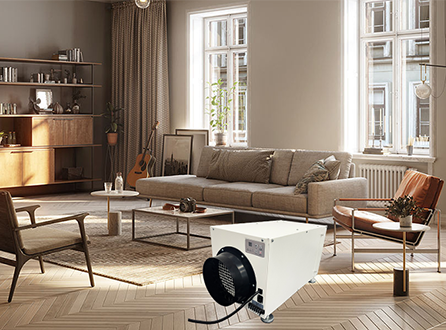
A whole house dehumidifier typically looks like a rectangular metal box, similar to a compact furnace or air handler. It is usually:
Installed near your existing HVAC system (furnace or air handler)
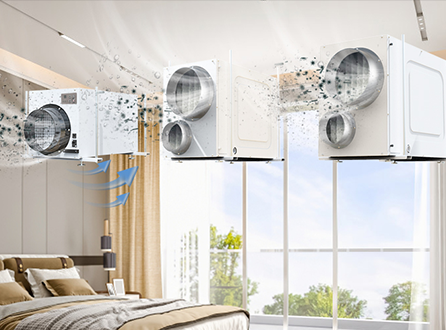
Connected directly to the ductwork
Mounted horizontally or vertically, depending on space
It's not designed for aesthetics—it’s functional and usually located in:
Basements
Crawl spaces
Utility closets
Attics
1. Main Dehumidifier Unit
This is the central box that contains:
Evaporator and condenser coils
Compressor
Fan
It resembles a small HVAC cabinet, often made of galvanized steel.
2. Duct Connections
The unit is connected to your HVAC system through ducts:
Return duct (inlet): Pulls humid air into the HVAC whole house dehumidifier
Supply duct (outlet): Sends dry air back into the system
There are two common configurations:
Dedicated return + supply: Independent airflow loop
Integrated with HVAC: Shares existing ductwork
3. Drain Line
Like any dehumidifier, it removes water from the air. Instead of a tank:
Water drains continuously through a PVC hose or pipe
Typically routed to a floor drain, sump pump, or condensate pump
4. Control Panel / Humidistat
A wall-mounted or integrated control system allows you to:
Set desired humidity levels (usually 40–50%)
Monitor system performance
Automate operation
Some advanced systems connect to smart thermostats.
5. Air Filter
Inline dehumidifiers often include a replaceable air filter:
Protects internal components
Improves indoor air quality
When installed, the setup looks like this:
Return Duct → Dehumidifier Unit → Supply Duct
↓
Drain Line
Or, integrated into your HVAC:
Furnace / Air Handler
↓
Dehumidifier
↓
Supply Air
In reality, everything is enclosed and connected with sealed ducts, so you'll mainly see a metal box with duct collars and a drain pipe attached.
Whole house dehumidifiers are larger than portable units:
Typical size: 20–40 inches wide
Weight: 50–120 lbs
Capacity: 70–150+ pints per day (PPD)
You're most likely to encounter this type of system in:
Homes in humid climates
New construction with indoor air quality upgrades
Houses with mold or moisture issues
Homes using sealed, energy-efficient building designs
An HVAC-integrated dehumidifier isn't something you "see" every day—it's more like a behind-the-scenes component of your climate control system. Visually, it's a boxy metal unit connected to ductwork with a drain line, but functionally, it plays a critical role in maintaining balanced humidity throughout your entire home.