R&D team continuously improves dehumidification technology

Obtained dozens of dehumidification patents

Quickly respond to customer needs

Care for employees, serve customers, and give back to society

Views: 1 Author: Site Editor Publish Time: 2026-08-11 Origin: Site

Humidity is an important but often overlooked factor in pet health and indoor comfort. While most pets can tolerate normal fluctuations in indoor humidity, persistently high humidity can make animals uncomfortable and may contribute to respiratory problems, skin irritation, overheating, and the growth of mold and other microorganisms.
For most household pets, an indoor relative humidity (RH) of around 40%–60% is a reasonable target.
Indoor Relative Humidity | Potential Impact on Pets |
Below 30% | Dry skin, irritated eyes, respiratory discomfort |
30%–40% | Generally acceptable, but may be dry for some animals |
40%–60% | Generally comfortable for most household pets |
60%–70% | Increasing risk of discomfort, mold, and odors |
Above 70% | High humidity; greater concern for overheating, mold, and respiratory issues |
The ideal humidity can vary depending on the species, age, coat, health, and environmental conditions. Some reptiles and amphibians, for example, naturally require much higher humidity than dogs or cats.
High humidity can make warm temperatures feel significantly more uncomfortable. Dogs, in particular, rely heavily on panting to regulate body temperature. When the surrounding air is already humid, evaporation becomes less efficient. This can make it harder for a dog to release heat.
This is particularly important for:
Dogs with thick or long coats
Short-nosed breeds
Overweight pets
Older animals
Puppies and kittens
Pets with certain underlying health conditions
During hot, humid weather, make sure pets have access to fresh water, shade, ventilation, and a cool indoor environment.
One of the biggest indoor concerns associated with excessive humidity is mold growth. When indoor RH remains elevated, moisture can accumulate on walls, ceilings, floors, carpets, furniture, and other surfaces. This creates favorable conditions for mold and mildew. Mold can produce spores and other airborne particles that may irritate the respiratory system of both humans and animals.
Pets may be exposed through airborne particles, damp bedding, moldy carpets, damp walls, moist crawl spaces, and poorly ventilated rooms
If you notice persistent musty odors, visible mold, condensation, or damp surfaces, the underlying moisture problem should be addressed rather than simply masking the odor.
High humidity can keep fur and skin damp for longer periods. This can be particularly problematic for pets with thick coats, skin folds, or allergies.
A consistently damp environment may contribute to skin irritation, hot spots, unpleasant odors, increased microbial growth, and discomfort after bathing or swimming.
Keeping bedding dry and ensuring adequate air circulation can help reduce these problems.
Pet bedding can absorb moisture from the air, especially in rooms with high RH.
Damp bedding may develop odors and provide a favorable environment for microorganisms. Wash pet bedding regularly and make sure it is completely dry before putting it back in the pet's sleeping area.
For animals that spend significant time in basements, garages, laundry rooms, or other humid areas, humidity control becomes even more important.
Humidity doesn't necessarily create odors by itself, but moisture can support the growth of microorganisms and make odors more noticeable.
Pet owners may notice stronger smells from litter boxes, pet bedding, carpets, upholstery, kennels, damp fur, areas around food, and water bowls.
Maintaining moderate humidity, cleaning regularly, and improving ventilation can help control these odors.
Dogs can be particularly vulnerable to hot and humid conditions because their primary cooling mechanism is panting.
A dog may show signs of overheating such as excessive or heavy panting, drooling, restlessness, weakness, difficulty breathing, vomiting, confusion, or collapse.
If a pet appears to be suffering from heat stress or heatstroke, move it to a cooler environment and seek veterinary assistance promptly. Heatstroke can be a medical emergency.
Cats generally tolerate moderate indoor humidity well, but excessive heat and humidity can also cause discomfort and increase the risk of overheating.
Cats may seek cooler areas, reduce their activity, or groom themselves more frequently when they are uncomfortable.
Make sure your cat has access to fresh water and a cool, well-ventilated area, particularly during summer.
Not every pet should be kept at the same humidity level.
For example, reptiles and amphibians can have very different humidity requirements depending on their species. Some tropical species need relatively high humidity, while other animals require a much drier environment.
Therefore, the goal should not be to create a single humidity level for every type of pet. Instead, determine the recommended environmental conditions for the specific species.
For dogs, cats, rabbits, and many other common household pets, however, maintaining a comfortable indoor environment around 40%–60% RH is a useful general guideline.
If your home's humidity consistently exceeds about 60%, consider taking the following steps.
A portable dehumidifier can remove excess moisture from indoor air and help maintain a more stable RH level.
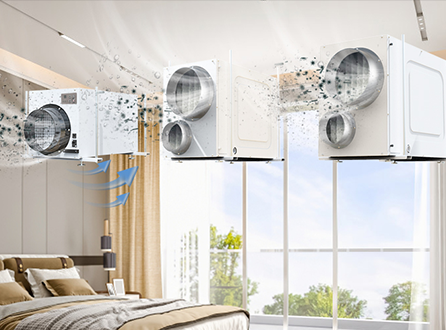
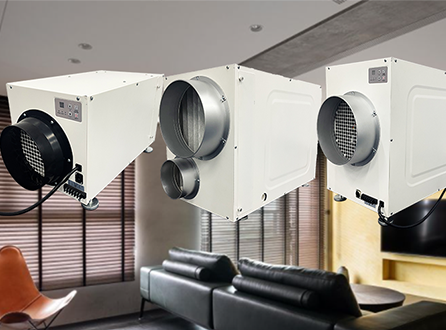
For larger homes or areas with persistent moisture problems, a whole-house dehumidifier may be more appropriate than a small portable unit.
A whole house dehumidifier can be especially useful in basements, crawl spaces, laundry rooms, pet rooms, garages, and rooms with poor ventilation.
When selecting a dehumidifier, consider the room size, moisture load, temperature, and desired humidity level rather than choosing a unit based only on floor area.
Bathrooms, kitchens, laundry rooms, and other moisture-producing areas should have adequate ventilation.
Exhaust fans can remove humid air at its source. However, ventilation is most effective when outdoor air is actually drier than indoor air. During very humid weather, simply bringing outdoor air inside may increase indoor humidity.
If humidity remains high despite using ventilation or a dehumidifier, look for a source of moisture.
Potential sources include plumbing leaks, roof leaks, foundation seepage, condensation, wet carpets, poor drainage, and damp crawl spaces.
Fixing the moisture source is often more effective than continuously treating the symptoms.
Regularly clean and dry pet bedding, crates, carpets, mats, food areas, water bowls, and litter box surroundings.
Good housekeeping combined with humidity control can significantly improve the indoor environment.
Yes, a dehumidifier can be used in a home with pets, provided it is operated safely.
Keep the home dehumidifier where pets cannot knock it over, chew the power cord, or access the water collection container. Follow the manufacturer's operating and cleaning instructions.
It's also useful to choose a model with automatic humidity control, which lets you set a target RH rather than run the machine continuously.
For example, setting the unit around 50%–55% RH can provide a reasonable starting point for many homes.
Excessive humidity can make it harder for pets to cool themselves, contribute to damp skin and bedding, increase odors, and create conditions favorable to mold and microbial growth.
For most dogs and cats, maintaining indoor relative humidity at approximately 40%–60% is a practical goal. Monitor humidity with a hygrometer, improve ventilation where appropriate, address moisture sources, and use a properly sized dehumidifier when necessary.
A comfortable humidity level isn't just about protecting your home—it can also help create a cleaner, drier, and more comfortable environment for your pets.