R&D team continuously improves dehumidification technology

Obtained dozens of dehumidification patents

Quickly respond to customer needs

Care for employees, serve customers, and give back to society

Views: 17 Author: Site Editor Publish Time: 2026-06-04 Origin: Site

Damp walls can lead to mold growth, peeling paint, structural damage, and poor indoor air quality. The fastest way to dry damp walls is to remove the moisture source, increase airflow, and use professional drying equipment to accelerate evaporation.
Before drying the wall, determine why it became damp:
Leaking pipes
Roof leaks
Flooding or water damage
Condensation from high indoor humidity
Water intrusion through exterior walls
Drying efforts will be ineffective if water continues entering the wall.
If flooding or a leak has occurred:
Mop up visible water.
Use a wet/dry vacuum to extract excess moisture.
Remove soaked carpets, furniture, and other materials near the wall.
The less moisture in the room, the faster the wall will dry.
Air movement is essential for drying.
To improve airflow:
Place high-velocity air movers or fans facing the damp wall.
Open interior doors.
Create cross-ventilation if outdoor conditions are dry.
Position multiple fans for larger affected areas.
Professional restoration contractors often use air movers continuously for 24–72 hours after water damage.
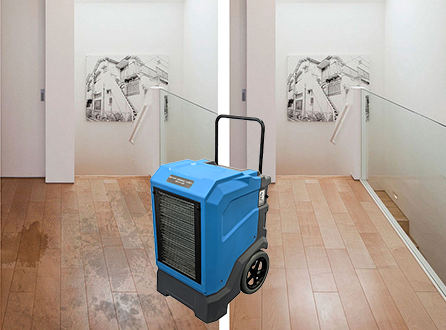
An LGR dehumidifier removes moisture from the air, allowing water trapped in walls to evaporate more quickly.
For best results:
Keep doors and windows closed while operating the dehumidifier.
Empty the water tank regularly or connect to continuous drainage.
Maintain indoor humidity between 30% and 50%.
For severe water damage, a commercial-grade refrigerant or LGR dehumidifier can significantly shorten drying time.
If materials are saturated:
Peel away wet wallpaper.
Remove water-damaged baseboards if necessary.
Cut out severely soaked drywall sections.
Remove insulation that has become saturated.
These materials can trap moisture and slow the drying process.
Warm air increases evaporation.
You can:
Raise room temperature to 70–80°F (21–27°C).
Use HVAC heating if available.
Use specialized drying systems in commercial applications.
Avoid excessive heat, which can damage drywall, paint, or wood finishes.
Professional drying companies use moisture meters to determine when walls are truly dry.
A wall may feel dry on the surface while moisture remains trapped inside. Monitoring ensures that drying is complete before repairs or repainting begin.
Typical drying times vary depending on wall construction, humidity, and the amount of water involved:
Situation | Typical Drying Time |
Minor condensation | 1–2 days |
Small leak | 2–5 days |
Moderate water damage | 3–7 days |
Flood-damaged walls | 1–3 weeks |
Using air movers and commercial dehumidifiers together can significantly reduce drying time.
The fastest way to dry damp walls is to stop the moisture source, use high-velocity fans to increase airflow, and run a dehumidifier continuously to remove moisture from the air. For severe water damage, combining air movers, commercial dehumidifiers, and moisture monitoring equipment can restore walls much faster and help prevent mold growth.