R&D team continuously improves dehumidification technology

Obtained dozens of dehumidification patents

Quickly respond to customer needs

Care for employees, serve customers, and give back to society

Views: 7 Author: Site Editor Publish Time: 2026-01-27 Origin: Site


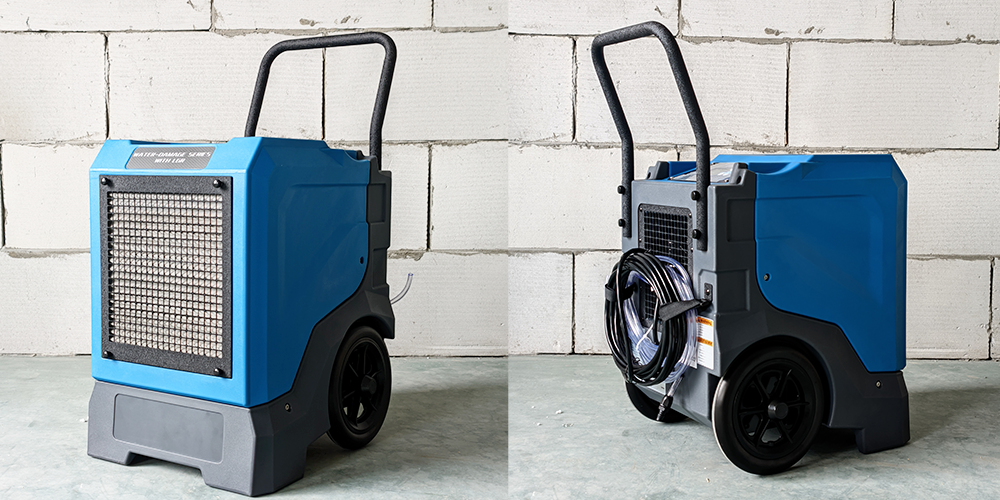
Dehumidifiers can help take the damp out of walls, but with important limitations. If you live in an area with a high-humidity climate, it is recommended that you install an HVAC system equipped with a whole house dehumidifier to protect your house from moisture throughout the year. If your house will be affected by floods during the rainy season, what you need is to contact a professional repair company that will use efficient LGR dehumidifiers and fans to save your house. The following content is about the methods and precautions for dealing with damp walls.
A commercial refrigerant dehumidifier removes moisture from the air, which lowers indoor relative humidity. When the air becomes drier, moisture trapped in damp walls (brick, drywall, concrete, plaster) gradually evaporates into the air, where the dehumidifier can then remove it. This process:
Speeds up drying after condensation, minor leaks, or flooding
Reduces mold growth and musty odors
Helps stabilize moisture in porous materials over time
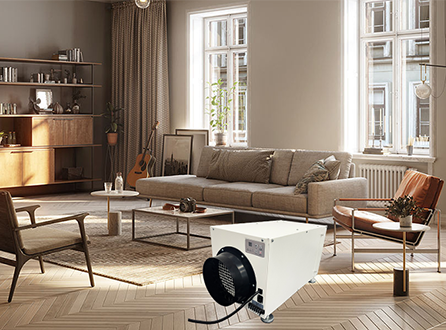
Hongtai is a reliable dehumidifier manufacturer that provides high-quality commercial, industrial, and whole house dehumidifiers. Our whole house dehumidifier can be directly connected to your HVAC system to protect your walls, ceilings, floors, and furniture. The commercial-strength LGR dehumidifiers are specially designed for flood damage restoration. Using LGR dehumidifiers together with air mover fans is the most effective way to remove moisture from your flooded house.
Commercial dehumidifiers are effective if the wall dampness is caused by:
Condensation (poor ventilation, cold walls)
High indoor humidity
Residual moisture after a leak has been fixed
Basements, crawlspaces, or garages with moisture migration
In these cases, continuous operation at 40–55% RH can noticeably dry walls over days or weeks.
An LGR dehumidifier cannot fix the source of damp if the wall is constantly being re-wetted. Examples:
Rising damp from the ground
Ongoing plumbing leaks
Exterior water penetration (cracks, failed waterproofing)
Poor drainage or foundation issues
In these scenarios, the wall may feel drier temporarily, but moisture will return unless the root cause is corrected.
For best results:
Use a properly sized (or whole-house) dehumidifier
Keep doors/windows closed while running it
Add air movement with fans directed at the wall
Maintain consistent temperature (warm air holds more moisture)
Fix leaks and improve exterior waterproofing first
Dehumidifiers help dry damp walls. But, they are not a permanent solution if moisture ingress continues. Dehumidifiers are best used as part of a broader moisture-control strategy.