


R&D team continuously improves dehumidification technology

Obtained dozens of dehumidification patents

Quickly respond to customer needs

Care for employees, serve customers, and give back to society

Views: 5 Author: Site Editor Publish Time: 2026-06-16 Origin: Site
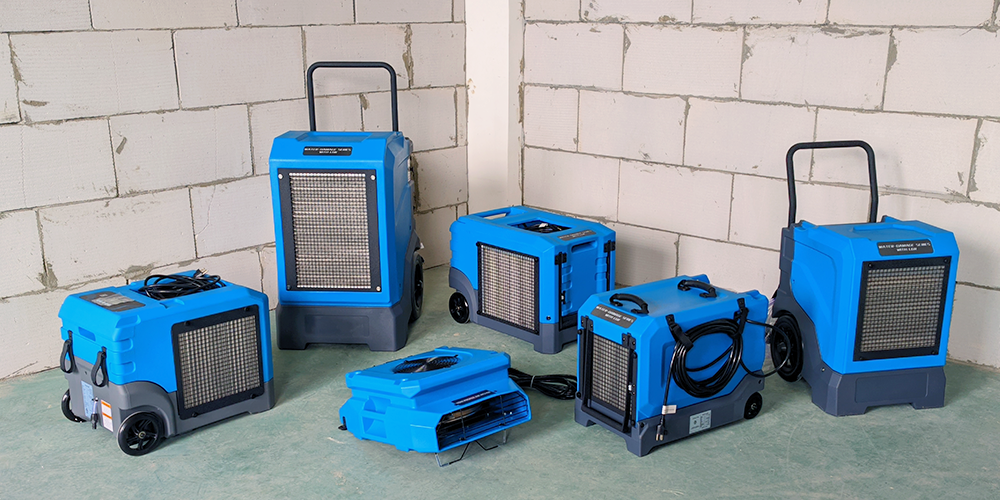
Choosing the right commercial dehumidifier is essential for maintaining product quality, protecting equipment, preventing mold growth, and creating a comfortable indoor environment. Whether you manage a warehouse, factory, office building, grow facility, or restoration project, selecting the appropriate unit requires careful consideration of several factors.
Start by identifying why you need a dehumidifier:
High ambient humidity
Condensation on walls, windows, or equipment
Mold and mildew prevention
Water damage restoration
Product storage protection
Manufacturing process control
Indoor agriculture or greenhouse humidity management
The severity of the moisture issue will influence the required capacity and type of dehumidifier.
Measure the area that needs humidity control:
Floor area (square feet or square meters)
Ceiling height
Total air volume
Number of rooms or zones
Large commercial facilities often require multiple units or a centralized humidity control system rather than a single portable dehumidifier.
Commercial dehumidifier capacity is typically rated in liters per day (L/day) or pints per day (PPD).
General Guidelines
Application | Recommended Capacity |
Small Office | 50–100 L/day |
Basement & Storage Area | 70–150 L/day |
Retail Store | 100–200 L/day |
Warehouse | 150–500+ L/day |
Grow Room | Based on plant transpiration load (/VPD chart) |
Water Damage Restoration | LGR units 70–165+ PPD |
Always choose a capacity based on moisture load rather than floor area alone.
Dehumidifier Type | Best Applications | Key Advantages |
Refrigerant Dehumidifiers | • Warehouses • Offices • Commercial buildings • Basements • Manufacturing facilities | • Energy efficient in warm environments • Lower operating costs • High moisture removal rates |
• Flood restoration • Water damage recovery • Construction drying | • Extract moisture at lower humidity levels • Faster structural drying • Highly portable | |
Desiccant Dehumidifiers | • Cold environments • Pharmaceutical facilities • Food processing plants • Cold storage facilities | • Effective at low temperatures • Precise humidity control |
Check the environmental conditions of your facility.
Refrigerant models typically perform best between 41°F and 100°F (5°C–38°C).
Desiccant models can operate effectively in colder conditions.
Low-temperature environments may require automatic defrost functionality.
Airflow affects how quickly moisture is removed.
Look for:
High CFM (Cubic Feet per Minute)
High m³/h airflow ratings
Uniform air distribution
Large warehouses and industrial facilities often require higher airflow than office environments.
Commercial applications typically require continuous drainage.
Common options include:
Gravity drain
Condensate pump
External drain hose
Building drainage integration
For unattended operation, continuous drainage is strongly recommended.
Modern commercial dehumidifiers may include:
Digital humidity control
Automatic restart after power outages
Wi-Fi and mobile app monitoring
Modbus integration
Building Management System (BMS) compatibility
Remote alarms and diagnostics
These features simplify facility management and reduce labor costs.
Operating costs can be high in commercial environments.
Evaluate:
Energy Factor (EF)
Power consumption
Moisture removal efficiency
Compressor quality
Variable-speed operation
A higher-efficiency unit may have a higher upfront cost but lower long-term operating expenses.
Commercial equipment should be designed for continuous operation.
Important features include:
Corrosion-resistant coils
Heavy-duty metal housing
Washable filters
Industrial-grade compressors
Easy access for maintenance
For demanding applications, choose equipment designed for 24/7 operation.
Warehouses
Prevent condensation, rust, and packaging damage.
Manufacturing Facilities
Maintain product quality and process stability.
Cannabis Grow Rooms
Control humidity throughout vegetative and flowering stages to prevent mold and optimize yields.
Food Processing Plants
Meet hygiene requirements and prevent moisture-related spoilage.
Restoration Contractors
Prioritize portability, durability, and rapid drying performance with LGR technology.
When selecting a supplier, consider:
Industry experience
Product certifications
OEM/ODM capabilities
Technical support
Warranty coverage
Availability of replacement parts
After-sales service
A reputable dehumidifier manufacturer can provide sizing assistance, customization options, and long-term technical support.
The best commercial dehumidifier is one that matches your facility's moisture load, environmental conditions, and operational requirements. By evaluating capacity, technology, airflow, drainage, energy efficiency, and durability, you can invest in a solution that protects your building, inventory, and equipment while reducing humidity-related problems and operating costs.


