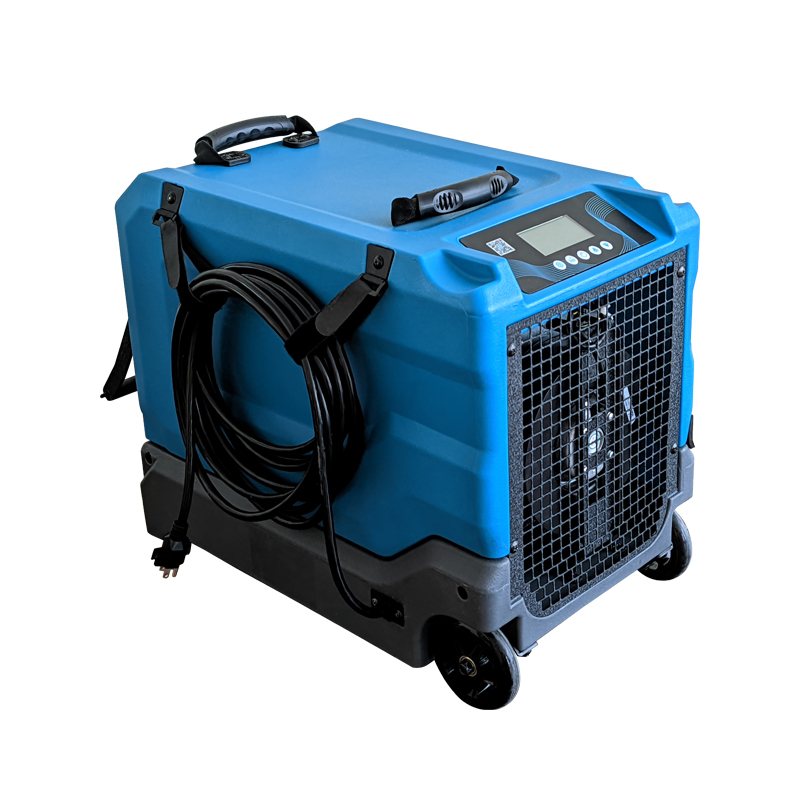
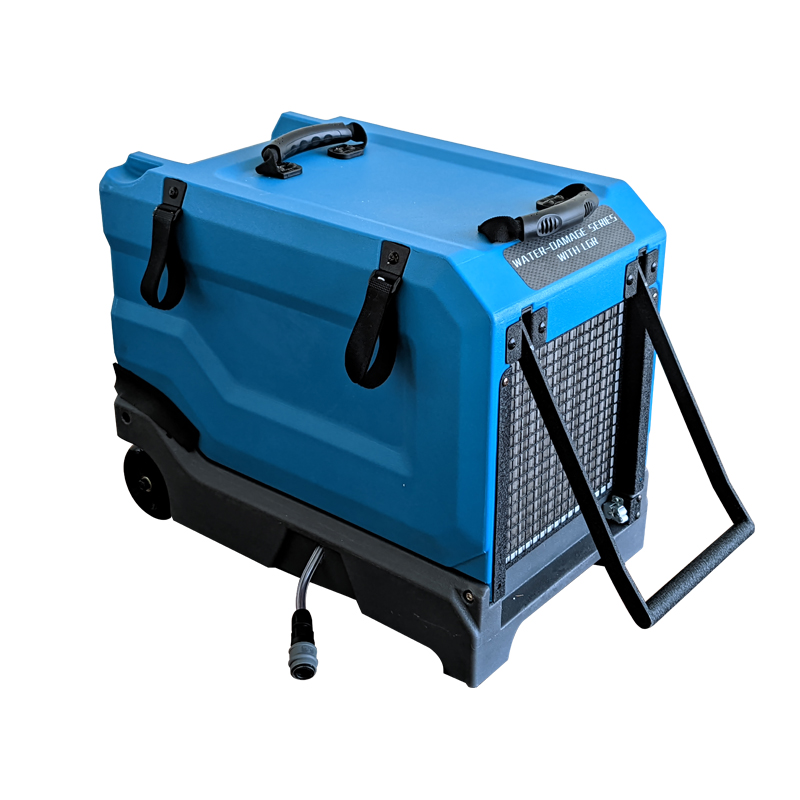
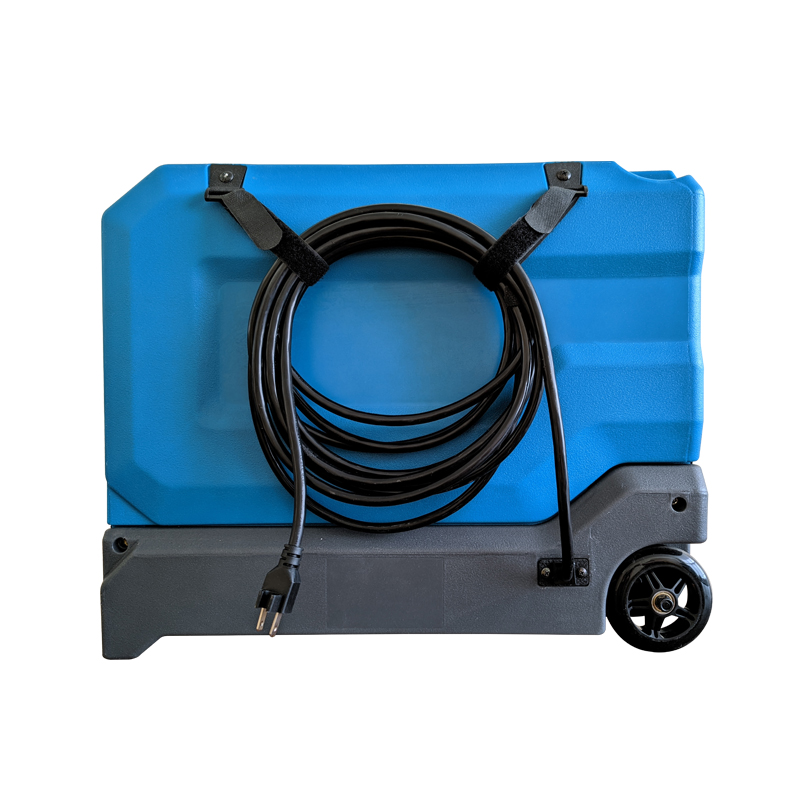
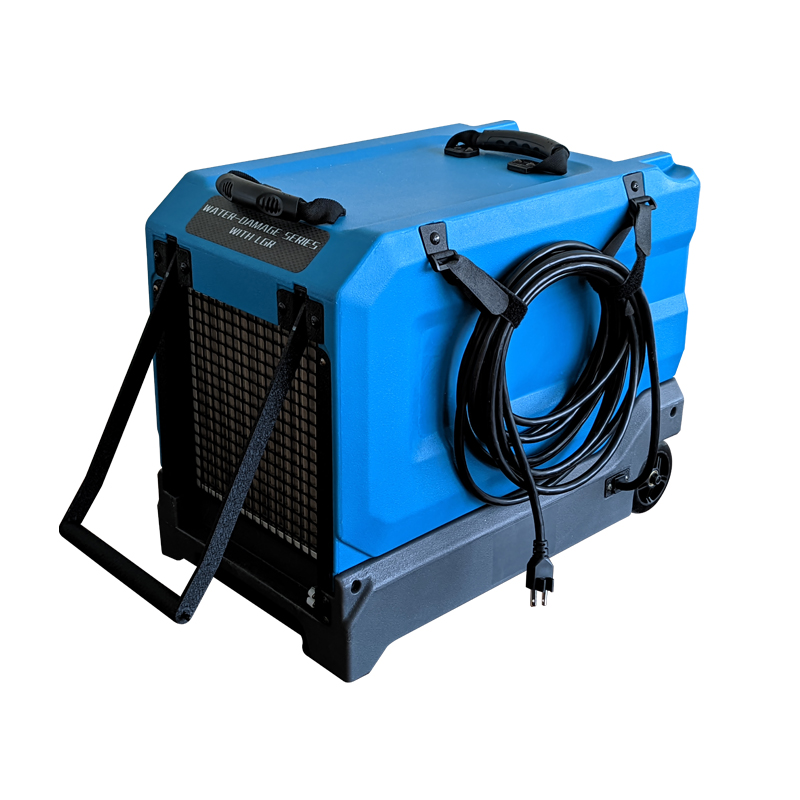
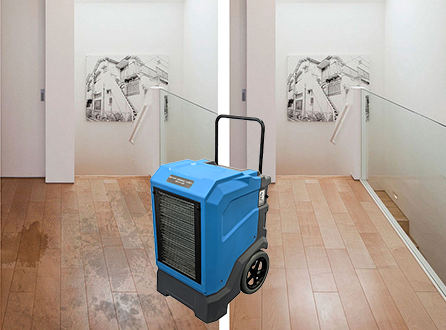
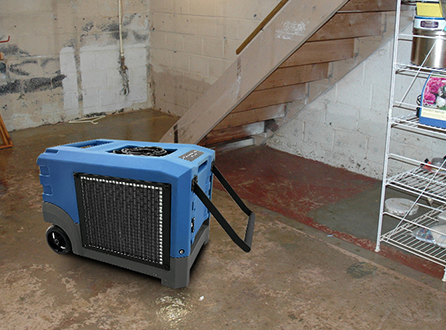
Data of ALGR65 Flood Dehumidifier with Drain Hose
| Model | ALGR65 |
| Supply Voltage | 220-240V / 50Hz |
| Current Draw | 4.6 Amps (@ 30℃/80%RH)
3.9 Amps (@ 26.7℃/60%RH) |
| Power | 833 Watts (@ 26.7℃/60%RH) |
| Airflow | 323 m³/h |
| Water Removal (@ 30℃/80%RH) | 65 Liters/day |
| Water Removal (@ 26.7℃/60%RH) | 42 Liters/day |
| Water Removal (@ 40℃/20%RH) | 10 Liters/day |
| Water Removal (@ 32℃/90%RH) | 80 Liters/day |
| Functioning Temperature Range | 5℃ - 38℃ |
| Functioning Humidity Range | 20%RH - 90%RH |
| Humidity Setting Range | 30%RH - 90%RH |
| Sound Pressure Level | / |
| Refrigerant Type / Amount | R410A / 600g |
| APP | Yes |
| WIFI | Yes |
| Timer | Yes |
| Timing | Yes |
| Defrosting Control System | Auto Defrosting |
| Display Board | LCD Panel |
| Filters | SUS304 |
| Draining | Condensate Pump |
| Drain Pipe Length | 6M |
| Housing | Roto-Molded Polyethylene Plastic |
| Wheels | 4 inch, Rubber |
| Net Weight | 31.8 kg |
| Gross Weight | 35 kg |
| Unit Dimensions | 542*328*442 mm |
| Package Dimensions | 660*450*580 mm |
| Loading Quantity (20'/40'/40') | 172/360/360 |
| Air Duct Size | 8 inch |
| Warranty | 3-Year |
| OEM/ODM | Yes |
How to Use an LGR Dehumidifier for Mould Remediation in Australia?
An LGR dehumidifier can be an important part of mould remediation in Australian homes and commercial buildings. However, it does not remove mould by itself. Its primary role is to reduce moisture and help create conditions that discourage further mould growth.
Before starting, identify and fix the source of moisture, such as leaks, flooding, condensation, or poor ventilation. Remove standing water and isolate heavily contaminated materials where necessary.
Place the LGR dehumidifier in the affected area with doors and windows closed where practical. Use air movers to increase air circulation and accelerate evaporation from wet walls, floors, carpets, and other materials. Set the humidistat according to the drying requirements and monitor relative humidity with calibrated moisture meters or hygrometers.
During remediation, aim to maintain indoor relative humidity below 60%, while following the drying and remediation procedures appropriate for the building and materials. Continue operating the equipment until moisture readings show that affected materials have reached an acceptable dry condition.
For Australian restoration contractors, an LGR dehumidifier combined with air movers, moisture meters, containment, proper cleaning, and appropriate personal protective equipment can provide an effective approach to moisture control during mould remediation.
How to Select High Quality Basement Dehumidifiers?
When selecting a basement dehumidifier, consider the following factors: