


R&D team continuously improves dehumidification technology

Obtained dozens of dehumidification patents

Quickly respond to customer needs

Care for employees, serve customers, and give back to society

Views: 1 Author: Site Editor Publish Time: 2026-07-31 Origin: Site
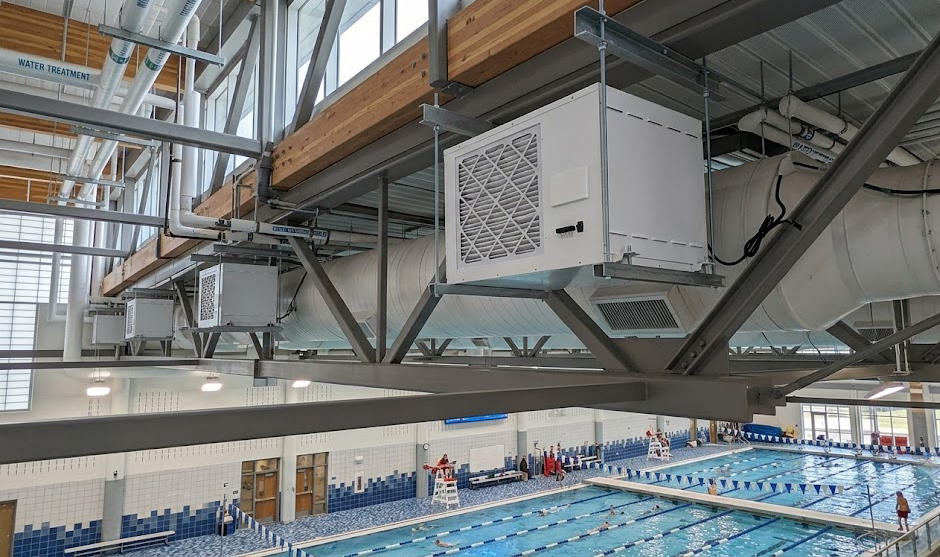
Indoor aquatic centres require precise humidity control to maintain a comfortable environment, protect building structures, and reduce energy costs. Unlike ordinary commercial buildings, swimming pools generate large amounts of water vapour every day from pool surfaces, showers, and wet areas. Without an effective dehumidification system, excessive moisture can cause condensation, corrosion, mould growth, and damage to walls, ceilings, and mechanical equipment.
Indoor swimming pools naturally create high humidity conditions. Water evaporates continuously from the pool surface, and evaporation increases with:
Higher water temperatures
Larger pool surface areas
Increased swimmer activity
Poor ventilation
High indoor air temperatures
When warm, humid air contacts cooler surfaces such as windows, steel structures, and ceilings, condensation forms. Over time, this can lead to:
Corrosion of metal structures
Peeling paint and damaged finishes
Mould and mildew growth
Unpleasant odours
Poor indoor air quality
Higher heating and maintenance costs
A dedicated aquatic centre dehumidifier removes excess moisture while recovering heat and maintaining comfortable temperature conditions.
Different aquatic facilities require different humidity control solutions. The most common systems include:
Best choice for:
Large indoor swimming pools
Public aquatic centres
Leisure centres
Hotels with indoor pools
Pool dehumidifiers with heat recovery are designed specifically for high-moisture environments. They remove humidity while recovering energy from the exhaust air to reduce heating costs.
Key advantages:
High moisture removal capacity
Energy-efficient operation
Reduced ventilation energy losses
Stable temperature control
Improved indoor comfort
These systems often integrate with HVAC controls to manage:
Relative humidity
Air temperature
Fresh air supply
Heat recovery
Pool water heating
Best choice for:
Small swimming pools
Fitness clubs
Hotel pools
Private aquatic facilities
Refrigerant dehumidifiers use cooling coils to condense water vapour from air. They are effective in warm environments where indoor temperatures are typically above 20°C.
Advantages include:
Lower initial investment
Simple installation
Good energy efficiency in warm conditions
Compact design options
However, standard commercial units may not be suitable for very large aquatic centres with extremely high moisture loads.
Best choice for:
Low-temperature aquatic facilities
Specialised humidity control applications
Facilities requiring very low humidity levels
Desiccant systems remove moisture using moisture-absorbing materials instead of refrigeration technology.
Advantages:
Excellent performance in cold conditions
Ability to achieve very low humidity
Reliable year-round operation
They are commonly used in applications requiring precise humidity control, although they may have higher energy requirements compared with heat-recovery refrigerant systems.
When selecting an industrial dehumidification system for a swimming pool facility, consider the following features:
Aquatic centres typically generate much higher moisture loads than normal buildings.
The dehumidifier should be selected based on:
Pool water surface area
Water temperature
Air temperature
Number of swimmers
Facility operating hours
Ventilation requirements
An undersized system will run continuously but fail to control humidity effectively.
Pool environments contain chlorine, disinfectants, and high moisture levels that accelerate corrosion.
Recommended materials include:
Stainless steel components
Anti-corrosion coatings
Treated heat exchangers
Durable protective housings
This improves equipment reliability and reduces maintenance costs.
Energy efficiency is a major concern for aquatic centres because heating and ventilation costs are high.
Modern pool dehumidifiers often include:
Exhaust air heat recovery
Condenser heat recovery
Pool water heating recovery
Recovered heat can be reused for:
Space heating
Pool water heating
Fresh air preheating
This can significantly reduce annual energy consumption.
Advanced aquatic dehumidifiers should include intelligent controls for:
Relative humidity monitoring
Temperature adjustment
Fan speed control
Energy-saving modes
Remote monitoring
Integration with a building management system (BMS) allows operators to optimize performance and reduce operating costs.
The required capacity depends on the facility size and operating conditions.
Facility Type | Recommended Solution |
Small private pool | Commercial refrigerant dehumidifier |
Hotel swimming pool | Compact pool dehumidifier with heat recovery |
Fitness centre pool | Commercial pool HVAC dehumidifier |
Public aquatic centre | Large heat recovery pool dehumidification system |
Water park | Industrial pool dehumidification system |
Professional humidity load calculations are recommended before selecting equipment.
Humidity control prevents:
Ceiling condensation
Structural corrosion
Wall damage
Mould development
This extends the service life of the building.
A properly controlled aquatic environment provides:
Comfortable air temperature
Reduced stuffiness
Better air quality
Less chlorine odour
Maintaining indoor relative humidity around 50–60% is commonly recommended for swimming pool environments.
Without humidity control, facilities often waste energy by continuously heating and ventilating humid air.
Heat recovery dehumidifiers can:
Reduce ventilation losses
Recover wasted heat
Improve HVAC efficiency
Regular maintenance is essential in harsh pool environments.
Clean Filters Regularly
Dirty filters restrict airflow and reduce moisture removal performance.
Inspect Coils
Pool chemicals can accelerate corrosion, so coils should be checked regularly.
Monitor Humidity Levels
Continuous monitoring helps identify performance issues before they become major problems.
Check Drainage Systems
Blocked drains can cause water leakage and equipment damage.
The best aquatic centre dehumidifier depends on the facility's size, design, and operating conditions. For most public swimming pools and large aquatic centres, heat recovery pool dehumidification systems provide the best balance of humidity control, energy efficiency, and long-term reliability.
When selecting a system, facility owners should prioritize:
High moisture removal capacity
Corrosion-resistant construction
Heat recovery capability
Intelligent controls
Professional system sizing
A properly designed aquatic centre dehumidification system not only protects the building but also creates a healthier, more comfortable environment for swimmers and staff.


