R&D team continuously improves dehumidification technology

Obtained dozens of dehumidification patents

Quickly respond to customer needs

Care for employees, serve customers, and give back to society

Views: 6 Author: Site Editor Publish Time: 2026-04-14 Origin: Site
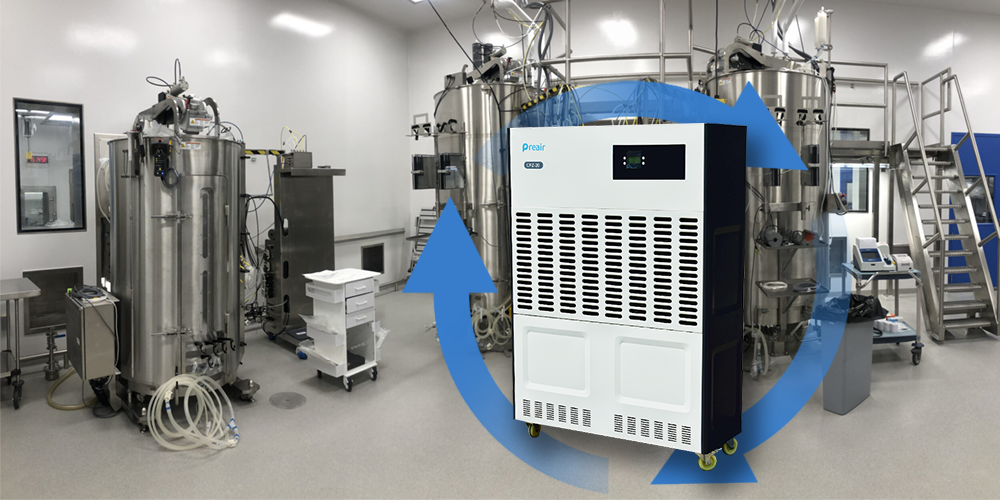
Humidity control in pharmaceutical environments is not optional; it is a critical quality attribute (CQA) that directly affects product stability, efficacy, and regulatory compliance.
This guide outlines how to effectively control humidity across pharmaceutical facilities using a systems-based approach.
Pharmaceutical products—especially tablets, capsules, powders, and biologics—are highly sensitive to moisture. Poor humidity control can lead to:
Chemical degradation (e.g., hydrolysis of active ingredients)
Altered dissolution rates and reduced bioavailability
Tablet softening, capping, or sticking during production
Microbial growth in controlled environments
Static electricity issues in dry conditions are affecting powder handling
Regulatory bodies such as the U.S. Food and Drug Administration and European Medicines Agency require strict environmental control as part of Good Manufacturing Practice (GMP).
Humidity setpoints vary depending on the process and product type:
Solid dosage manufacturing: 30–50% RH
Coating processes: 40–60% RH (tight control required)
Sterile/cleanrooms: 30–60% RH (depending on classification)
Raw material storage: typically ≤50% RH
Packaging areas: 35–50% RH to prevent moisture ingress
In many cases, dew point control is more critical than relative humidity, especially in low-temperature or high-precision environments.
Dehumidification is the backbone of humidity control in pharmaceutical facilities.
Refrigerant Dehumidifiers
Suitable for moderate temperature environments
Energy-efficient for general areas
Common in warehouses and secondary production spaces
Hongtai is a source factory of industrial dehumidifiers. The dehumidifier for pharmaceutical industry is also provided. Contact us if you need a professional solution.
Desiccant Dehumidifiers
Essential for low humidity requirements (<40% RH)
Perform well in low-temperature and sterile environments
Ideal for tablet compression, capsule filling, and packaging lines
Desiccant systems are often preferred in pharma due to their ability to achieve low dew points consistently.
Humidity control must be tightly integrated into the HVAC system design.
Use AHUs (Air Handling Units) with humidity control modules
Incorporate cooling + reheating cycles for precise RH control
Maintain pressure differentials to prevent contamination
Apply HEPA filtration in cleanroom environments
A properly engineered HVAC system ensures stable humidity while maintaining airflow, cleanliness, and temperature.
Cleanrooms require strict environmental parameters:
Continuous monitoring of RH, temperature, and pressure
Use of automated control systems (BMS/SCADA)
Zoned humidity control to match ISO classifications
Even small deviations can result in non-compliance or batch rejection.
Preventing moisture ingress reduces system load and improves stability.
Install vapor barriers in walls and ceilings
Seal penetrations around ducts, pipes, and cables
Use airlocks and controlled entry points
Design proper drainage systems to avoid water accumulation
Facility design plays a major role in long-term humidity stability.
Accurate measurement is essential for both control and compliance.
Deploy calibrated hygrometers and dew point sensors
Maintain continuous data logging for audits
Set alarm thresholds for deviations
Ensure compliance with data integrity standards (e.g., ALCOA principles)
Digital monitoring systems provide the traceability required by regulators.
Operational discipline is as important as equipment.
Define humidity setpoints for each process
Establish response protocols for deviations
Schedule routine calibration and maintenance
Train personnel on environmental control procedures
Consistent SOP execution ensures reliability and compliance.
Challenge: Seasonal humidity fluctuations
Solution: Pre-condition incoming air and increase dehumidifier capacity during high-load periods
Challenge: Condensation on equipment
Solution: Control dew point and insulate cold surfaces
Challenge: High energy consumption
Solution: Use energy recovery systems and optimize HVAC cycling
Ensures product quality and stability
Maintains GMP compliance
Reduces batch rejection and financial loss
Improves process consistency and efficiency
Protects sensitive equipment and materials
Humidity control in the pharmaceutical industry requires more than standalone equipment—it demands a fully integrated environmental control strategy combining dehumidification, HVAC engineering, facility design, and real-time monitoring.
By maintaining precise humidity levels throughout production and storage, pharmaceutical manufacturers can safeguard product integrity, meet regulatory requirements, and optimize operational performance.