


R&D team continuously improves dehumidification technology

Obtained dozens of dehumidification patents

Quickly respond to customer needs

Care for employees, serve customers, and give back to society

Views: 8 Author: Site Editor Publish Time: 2025-12-23 Origin: Site
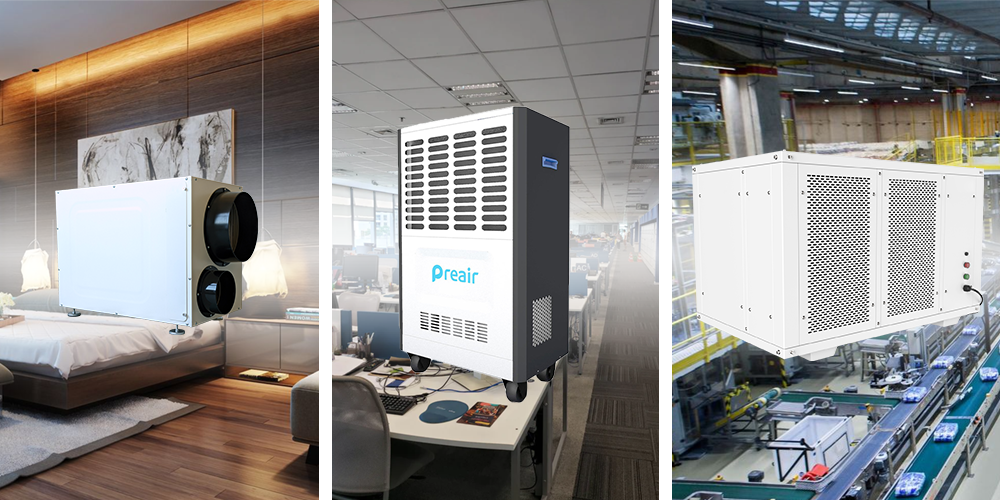
Dehumidifiers do consume electricity, but whether they use "a lot" depends on unit size, technology type, runtime, and environmental conditions. In most residential and commercial applications, their energy use is moderate and predictable, especially when compared to the damage they prevent.
Residential Dehumidifiers (30–70 PPD)
Power draw: 300–700 watts
Daily energy use: 4–8 kWh (running 12–16 hours)
Monthly cost: approximately $15–35 (at $0.12–0.15/kWh)
Commercial Units (70–150 PPD)
Power draw: 600–1,200 watts
Daily energy use: 8–18 kWh
Monthly cost: $30–80
Industrial Dehumidifiers (200–1,000+ PPD)
Power draw: 1.5–6 kW
Daily energy use: 20–90+ kWh
Monthly cost: $100–500+, depending on duty cycle
Key Efficiency Metrics
Energy Factor (EF) or Integrated Energy Factor (IEF)
Measures liters/pints of water removed per kWh
Higher EF = lower operating cost
Modern ENERGY STAR® units typically use 20–30% less energy than older models.
A properly sized dehumidifier:
Runs longer at lower load
Cycles less frequently
Uses less total energy than an undersized unit running continuously
Common causes of excessive energy use:
The unit is too small for the space
High infiltration (open doors, air leaks)
Set RH unrealistically low
No drainage, causing shutoffs and restarts
Refrigerant Dehumidifiers
Most energy-efficient at >60°F (15°C)
Lower operating cost
Preferred for homes, basements, and warehouses
Desiccant Dehumidifiers
Use more electricity per pint
Essential for cold or low-RH environments
Higher energy cost, but necessary for certain applications
While a dehumidifier may add:
$0.50–$2.50 per day (residential)
$3–$15 per day (industrial)
It can prevent:
Mold remediation costs
Structural corrosion
Inventory damage
HVAC inefficiency
Health complaints
In cost–benefit terms, dehumidification is usually net positive.
Choose the correct capacity (do not undersize)
Set RH to 45–55%, not 30–35%
Use continuous drainage
Seal air leaks and reduce infiltration
Pair with HVAC control where applicable
Select high-IEF industrial dehumidifiers
Dehumidifiers do not inherently use "a lot" of electricity, especially when correctly sized and operated within their optimal temperature range. Energy consumption is controllable and typically far lower than the cost of moisture-related damage.


